
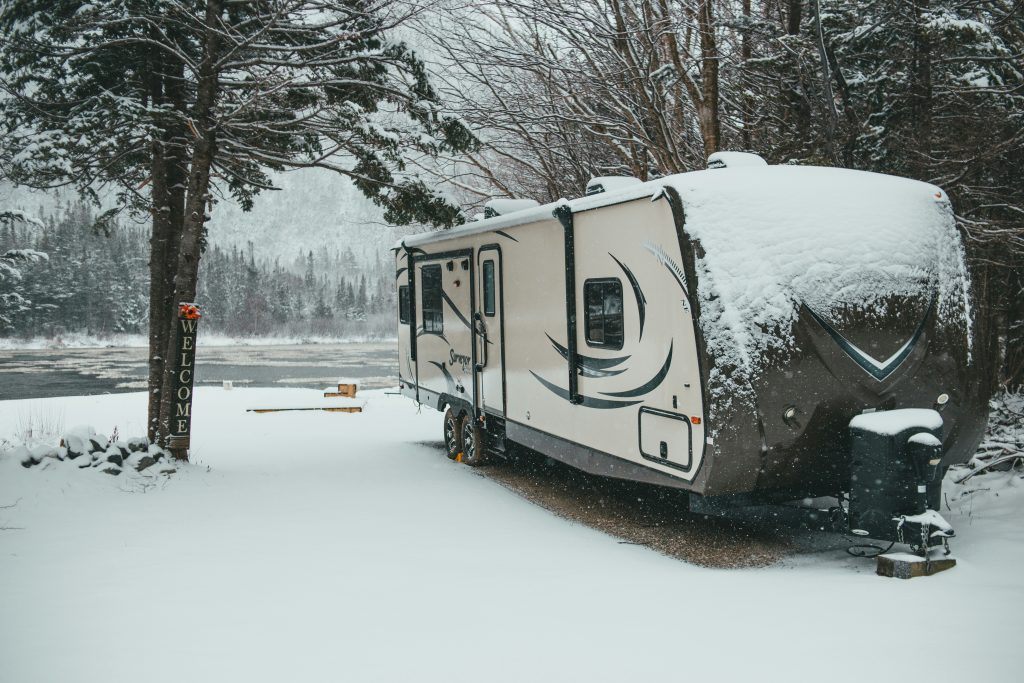
Water expands when it freezes
Water left in pipes, valves, pumps, or appliances can expand as it freezes and place pressure on components. Damage may not be obvious until the system is filled and pressurized again in spring.
Follow the procedure for your exact RV
Motorhomes, travel trailers, and fifth wheels can have different plumbing layouts. Start with the owner’s manual and follow its sequence for draining tanks, bypassing the water heater, and protecting the pump and lines. If using RV antifreeze, choose a product intended for the task and follow the label.
Remember hidden components
Outdoor showers, exterior kitchens, filters, and low-point drains are easy to overlook. Check the manufacturer’s list of water-bearing components, and make sure removable filters are handled as directed. A quick drain does not prove every line is empty.
Inspect seals and the roof
Check roof seams, windows, vents, and exterior storage doors for cracked sealant or evidence of water entry. Arrange repairs before storage if you see soft areas, stains, or dampness.
Know when to call a professional
If you cannot identify the water-heater bypass, have a complex filtration system, or suspect a leak, professional help can be worthwhile. Incorrect winterization may cost more than a service appointment.
Leave a reminder for spring
Label disconnected components and keep a checklist of steps that must be reversed before use. Reconnect water slowly in spring and inspect for leaks.
Every RV and campground has its own requirements. Check your owner’s manual, current local guidance, and resort policies before making safety, maintenance, or booking decisions.