
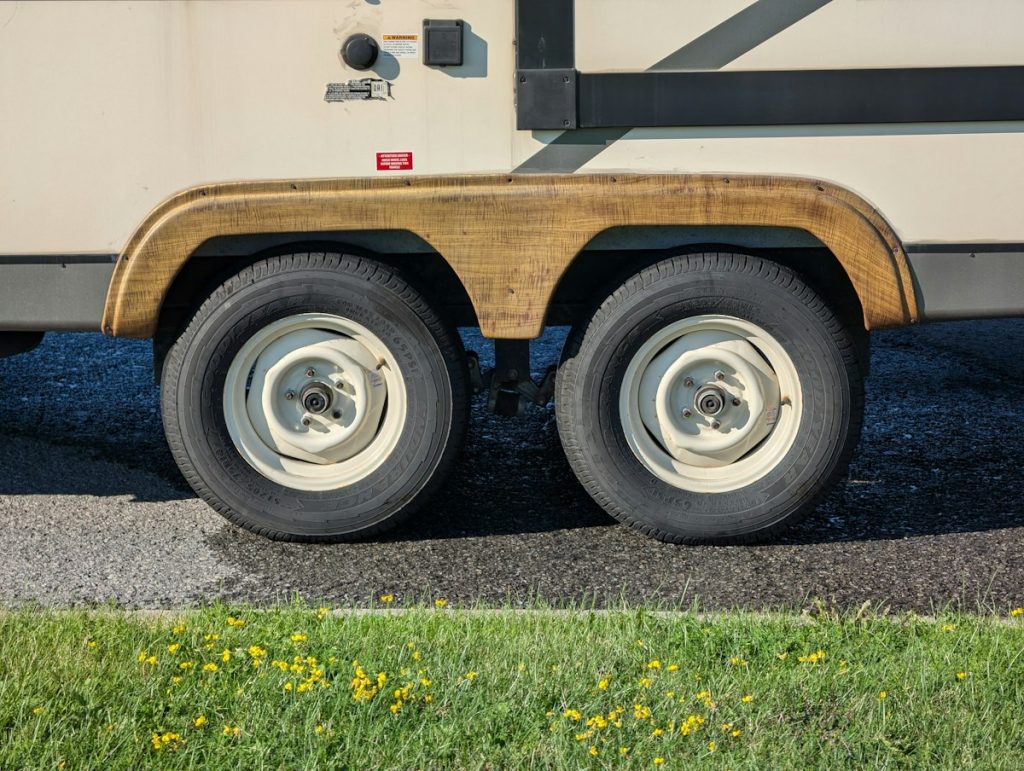
Start with the correct pressure
Check pressure when tires are cold and use the setting specified for your vehicle and load. Do not guess based only on the number printed on the sidewall. Consult the RV and tire manufacturers or a qualified tire professional if you are unsure.
Look for damage and uneven wear
Inspect the sidewalls and tread for cuts, bulges, cracking, embedded objects, or unusual wear. Seek professional advice when anything looks suspicious. Do not drive on a tire with a bulge or obvious structural damage.
Check tire age, not only tread
RV tires can age even when the vehicle travels relatively few kilometres, especially with sunlight, heat, underinflation, or long storage. Find the date code and follow the tire maker’s replacement guidance.
Consider the load
Overloading an RV or distributing weight poorly places extra stress on tires. Know your vehicle’s weight ratings and stay within them. If you have not weighed your loaded RV, consider using an appropriate certified scale.
Do not forget the spare
If your setup carries a spare, inspect its condition and pressure. Confirm that you have the correct tools and know whether the manufacturer recommends roadside professional service rather than changing a wheel yourself.
Make checks routine
Inspect tires before each trip and periodically on longer journeys. Keep a record of pressure readings, tire dates, and service so you can spot changes over time.
Every RV and campground has its own requirements. Check your owner’s manual, current local guidance, and resort policies before making safety, maintenance, or booking decisions.